

Concentration & Demineralization of Lactose
Download Full Case Study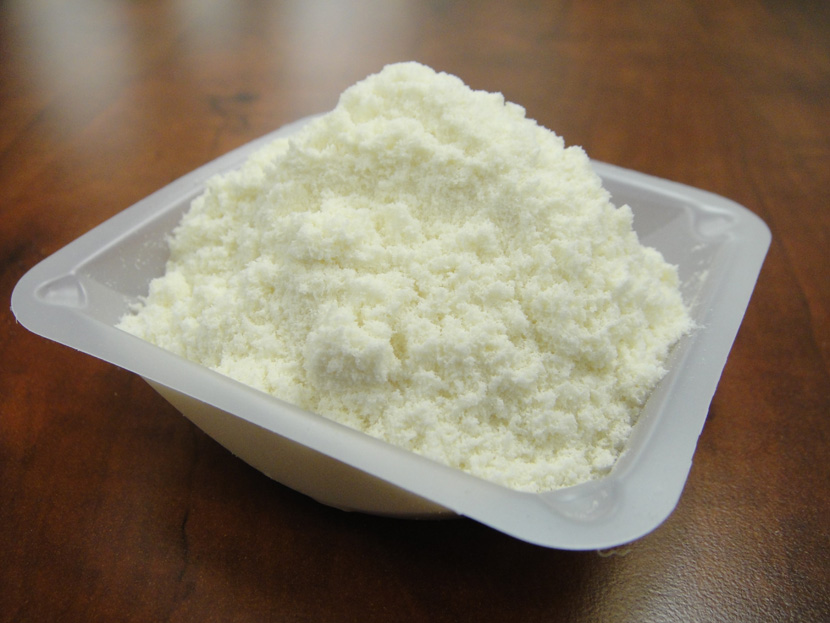
Background
In the concentration of whey protein, the byproduct generated is a salty lactose solution. This lactose can be concentrated with a nanofiltration membrane for use in the food, pharmaceutical, and brewing industries. Synder offers two different NF membranes, the NFX (150-300Da) and the NFW(300-600Da), which were both tested for effectiveness in concentrating and desalting a simulated lactose feed stream.
Test 1: NFX
Feed Solution, Membrane, and Operating Conditions
| Feed Solution | |
| Material | Simulated Sweet Whey UF Permeate |
| Lactose Concentration | 4% |
| Salt Concentration (NaCl) | 0.5% |
| Synder Membrane | |
| Element | NFX-Spiral Element |
| Membrane | Polyamide-TFC |
| NF Standard Operating Parameters | |
| Pressure (PSI) | 110 |
| Temperature (C) | 20-25 |
Results
Conductivity and TOC were measured to evaluate the NFX’s performance in both concentrating lactose and rejecting salt. The performance is summarized below.
| Filtration Results | |
| Lactose Concentration Factor | 3-4 |
| Lactose Concentration in Resulting Feed | 14% |
| Average Permeate Flux (GFD) | 21 |
| Overall Lactose Rejection (%) | >98.5 |
Test 2: NFW
Synder’s NFW membrane was also tested in a constant volume diafiltration mode where DI water was added to the feed stream with an equal amount of permeate water extracted from the demineralization process. The operating conditions and membrane specification are listed below. The feed solution is a simulated UF permeate from sweet whey protein separation process, which contains 8% lactose and 0.44% sodium chloride.
Feed Solution, Membrane, and Operating Conditions
| Feed Solution | |
| Material | Simulated Sweet Whey UF Permeate |
| Lactose Concentration | 8% |
| Salt Concentration (NaCL, ppm) | 4400 |
| Synder Membrane | |
| Element | NFW-Spiral Element |
| Membrane | Polyamide-TFC |
| NF Standard Operating Parameters | |
| Pressure (PSI) | 110 |
| Temperature (C) | 20-25 |
Results
| Filtration Results | |
| Total Volume of DI Water Used (Gal) | >18 |
| Salt Dilution Factor | 5.7 |
| Salt Concentration in Final Feed (ppm) | 770 |
| Average Permeate Flux (GFD) | 11.6 |
| Overall Lactose Rejection (%) | >94% |
Conclusion
Both the NFX and NFW membranes were effective in concentrating lactose from simulated UF permeate. The NFX performs better with respect to overall lactose yield, while the NFW offers a better balance of lactose yield and salt passage through the membrane. The NFW achieves excellent fractionation of lactose and salt while operating at lower pressures than typical NF membranes. These results suggest that Synder’s NF membranes are well suited for multiple types of lactose concentration.
questions? Fill out this form. We’ll contact you within 24 hours!
CASE STUDY
SEAWATER SULFATE REMOVAL
As global demand rises, nanofiltration technology has become essential throughout the oil and gas industry by improving the efficiency of waterflooding… //READ MORE
Applications
Resources
MEMBRANE RESOURCES
- Definition of a Membrane
- Membrane Materials: Organic vs. Inorganic
- Pressure-Driven Membrane Filtration Processes
- Concentration Polarization in Pressure-Driven Processes
- Degrees of Membrane Separation
- Flux Behavior in Membrane Processes
Module Configurations & Processes
-> View all membrane resourcesTUTORIALS